This badge card is a 12 lead STEMI reference tool. It shows the standard 12 lead layout and the associated "adjacent"� leads relative to the location in the heart. On the back there is also a chart of STchanges and their association to particular...
This card features the four major vital signs (respiratory rate, heart rate, blood pressure, temperature) as well as pulse oximetry and other important "5th" vital signs. For each vital sign there is a normal range listed as well as some of the major...
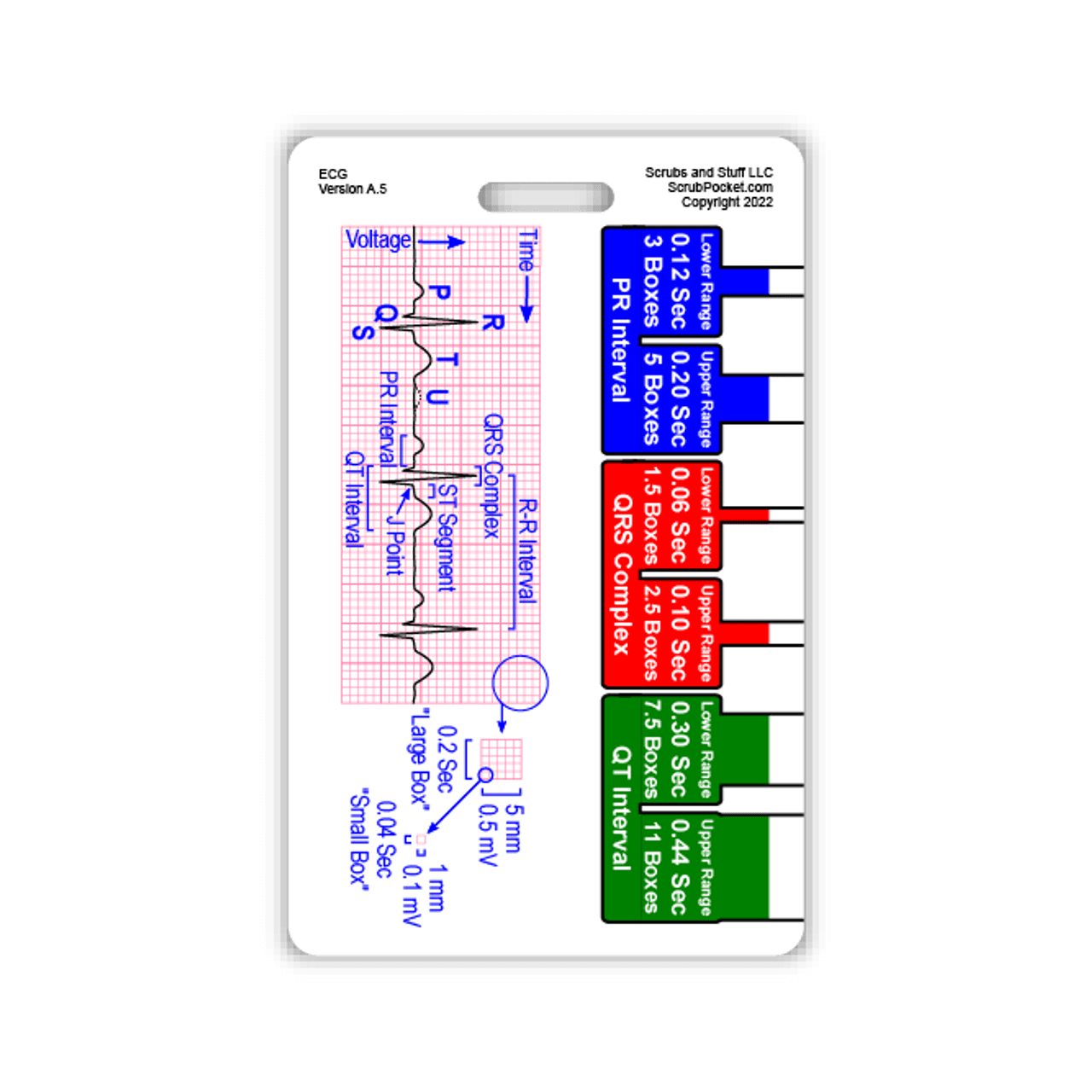
This badge card is an ECG Ruler, Caliper, and Diagram all in one. The diagram is of a basic ECG with all the common terminology and overview of the different points on an ECG. Additionally it has an ECG ruler on one side that helps you measure the heart...
This card features lab values of an arterial blood gas (ABG) as well as a venous blood gas (VBG). Both blood gases are shown in conventional units (US) and SI units (international). On the reverse is a chart to assist you in determining the patient's...
Wong-Baker FACES® Pain Rating Scale (in English) on one side and Wong-Baker FACES® Pain Rating Scale (in Spanish) on the reverse.
We are pleased to be the exclusive provider of Wong-Baker FACES® products. Purchasing these products gives you...
This card features a great visual diagram and anatomical references for standard 12 lead placement. It also includes placement for the less common right sided and posterior 12 leads.
Your patient is crashing - you need to tube them - what do you do? SeeTheMedLife and ScrubPocket have teamed up to bring you our first in the series of Crash Cards, Airway. The card is setup as a timeline so you go through each step in sequence, and all...
If you are around ventilators this is a great card to have. It features the ARDS Net parameter guidelines - including FiO2/PEEP chart. This card has been introduced during the Covid-19 crisis to assist healthcare workers who may be less familiar with...
This card features the 12 cranial nerves (numbering 1 to 12 and roman numerals), their sensory/motor classifications, and their primary function/s. On the back is a basic test for each nerve's function/s including a diagram for eye movements. Many...
This card walks you through two of the most commonly used IV medication formulas - converting dosing into cc/hr in either mg/min or mg/min/kg (alternatively: mcg/min or mcg/min/kg). It also simplifies the calculation if you need drops per minute using...
No more calculations! This chart calculates Tidal Volume based on Ideal Body Weight. Just cross reference the patients height and the ordered Tidal Volume per kg to find the Total Tidal Volume. One side is for males and the other for females. Very easy...
The RASS is used to describe a patient's level of alertness or agitation, most commonly during intubation to avoid over or under-sedation. Either extreme is bad for patient outcome and this tool assists providers in keeping a patient at an optimal...
The Pause allows a moment of reflection after the death of a patient, and offers help with closure. It can be an opportunity to acknowledge the importance of the moment, and be a helpful transition for everyone present. Since it is shared in silence, The...
If you are around ventilators this is a great card to have. It features initial ventilator settings and management including several condition specific recommendations. This card has been introduced during the Covid-19 crisis to assist healthcare workers...



 12 Lead STEMI Tool w/ Corresponding Vessels Chart Badge Card
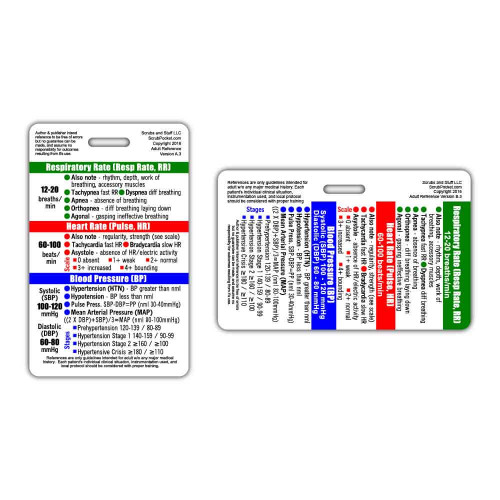 Adult Vital Signs Badge Card
 ECG Ruler & Diagram Badge Card
 Arterial Blood Gas Badge Card
 Wong-Baker FACES™ Pain Rating Scale w/ Spanish Rating Scale Badge Card
 EKG 12 Lead Placement Badge Card
 Dermatome Diagram Badge Card
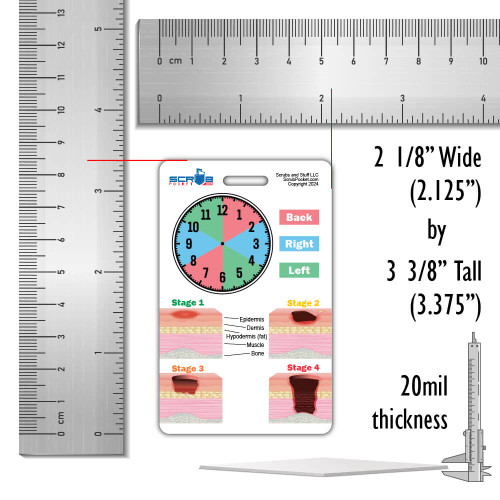
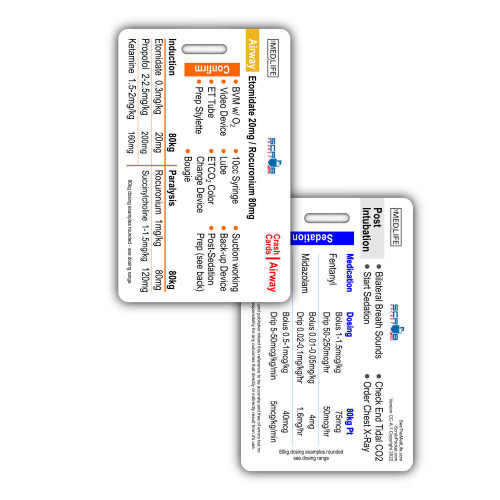 Airway Crash Card Badge Card
 ARDS Badge Card
 Cranial Nerves Badge Card
 Wound Ruler (Clear) Badge Card
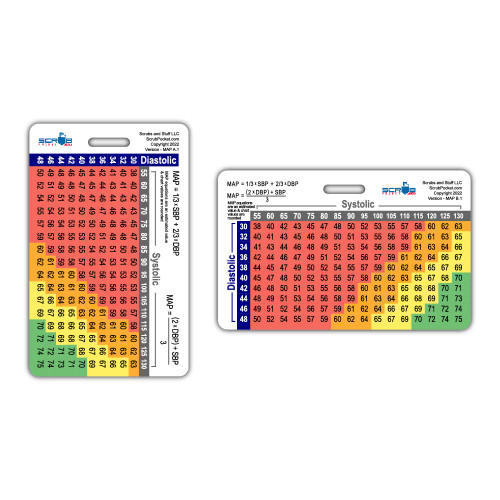 Mean Arterial Pressure (MAP) Badge Card
 Medication Math & Drip Titration Badge Card
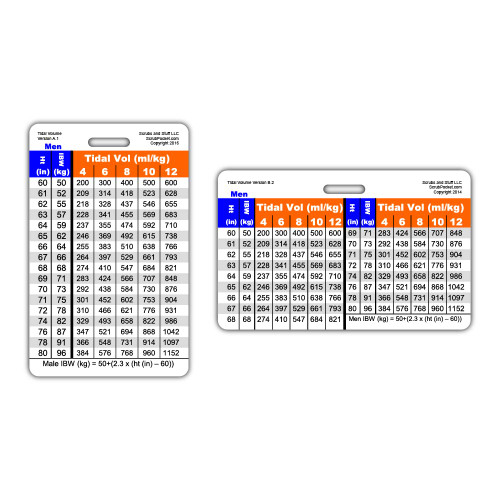 Tidal Volume Badge Card
 RASS Badge Card
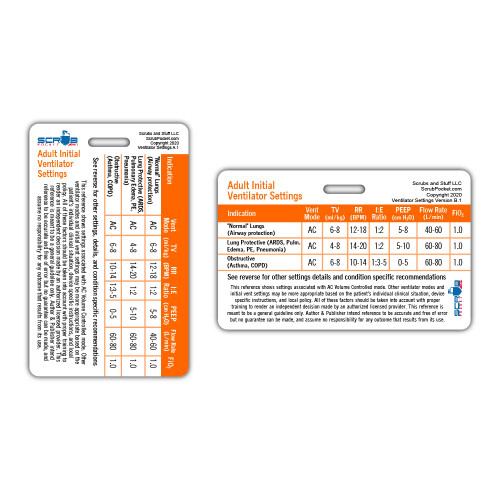 Ventilator Management Badge Card